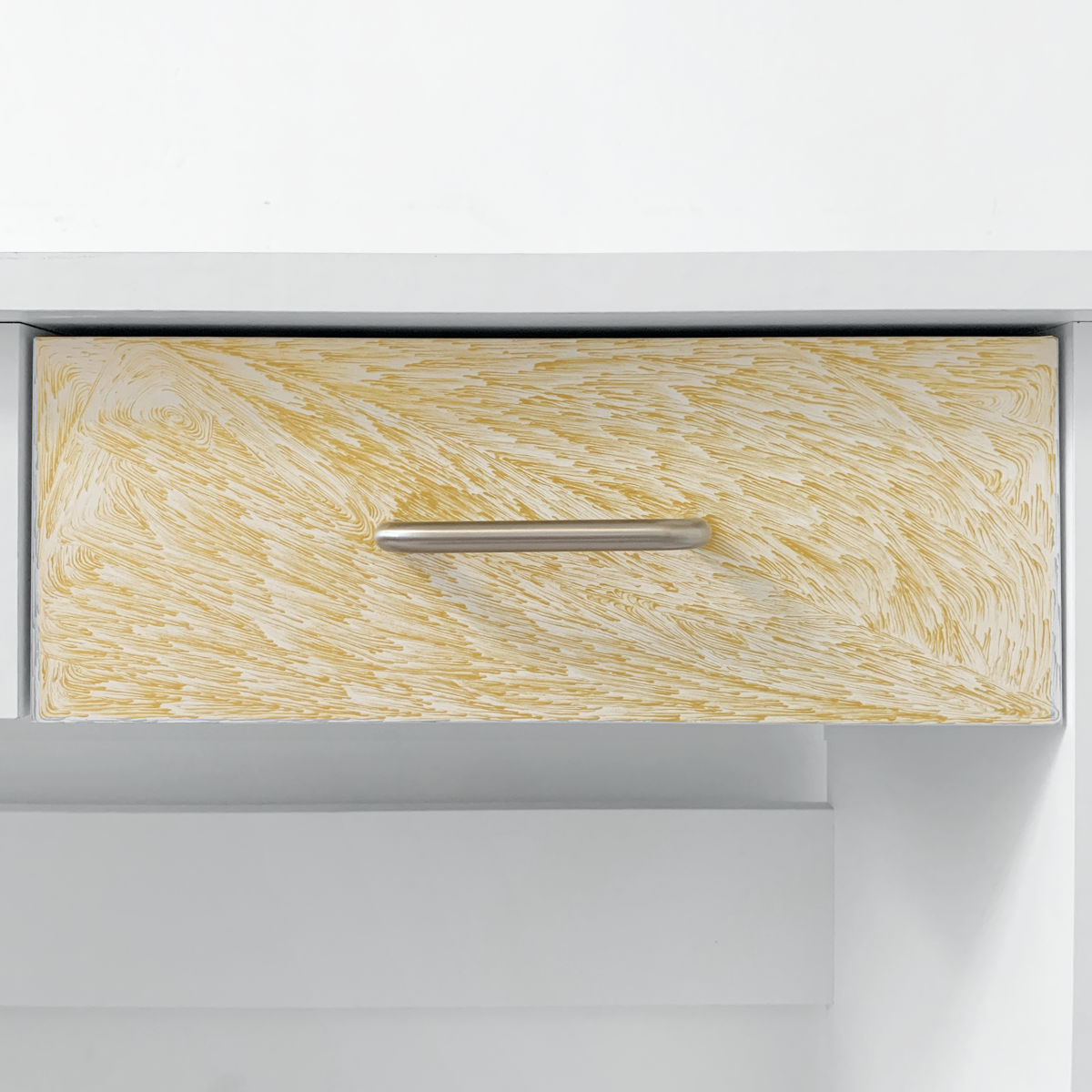
acrylic on desk, 2021/2022, 100 x 75 x 40 cm (drawer front 33 x 13 cm)
The spacing of the drawer handle screws determined the outcome of the painting process. Any variation in their placement would have altered the final result. Similarly, when five nations convene on 3 January 2022 to forge a plan to avoid nuclear war, their decisions—and no others—will define the world's future "picture".
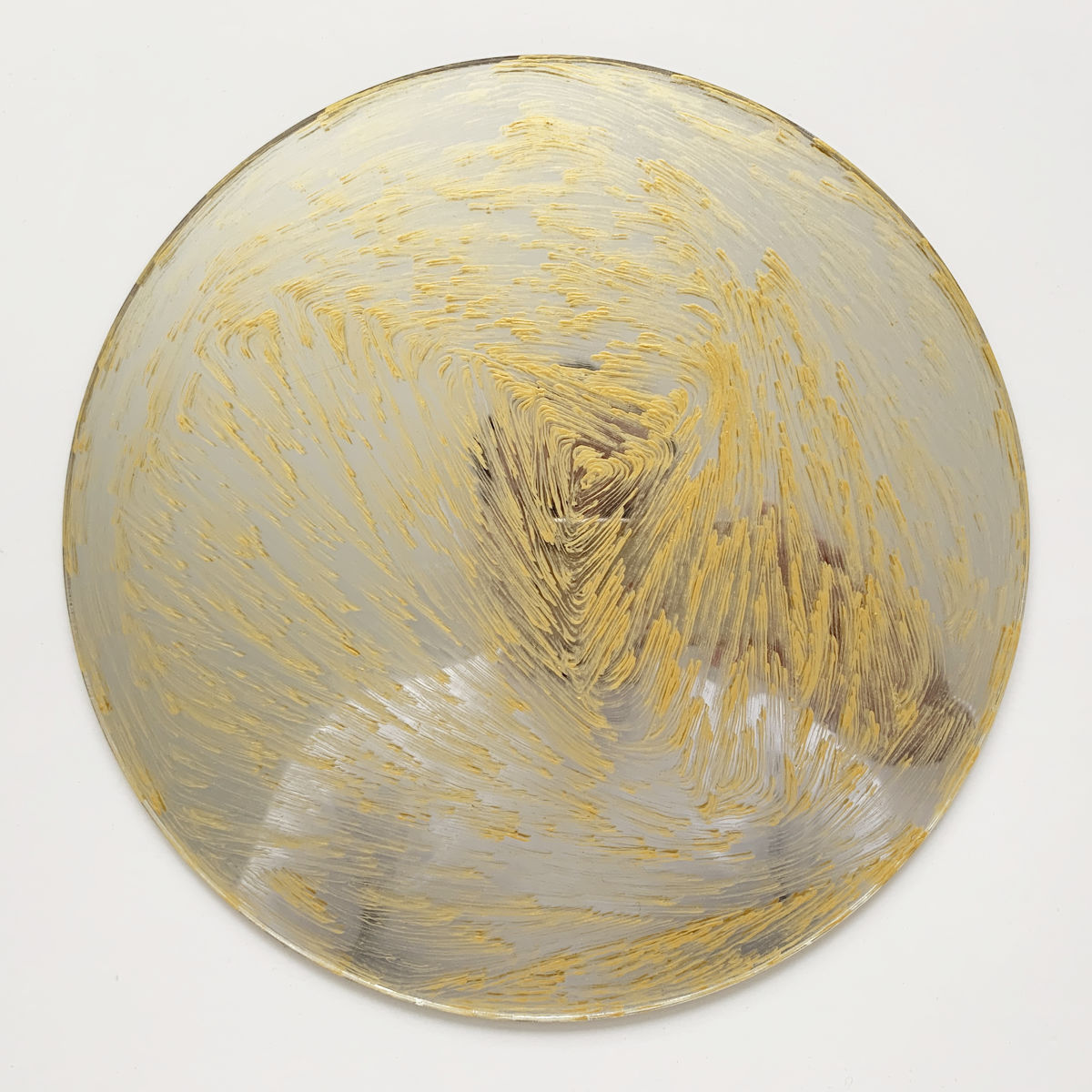
acrylic on a silver mirror, 2022, Ø 25 cm
There were moments while working on this piece when I realized I wasn't reacting to the brushstroke itself, but to its reflection in the mirror—a phantom shape that existed, yet not where I believed it to. I was chasing something intangible, or perhaps tangible but displaced. As a result, the work became a dialogue between intention and illusion: the marks I meant to leave, and those I made to "correct" distortions that never truly existed. In the end, all brushstrokes merge into a single truth—the painting as it is, not as it appeared.
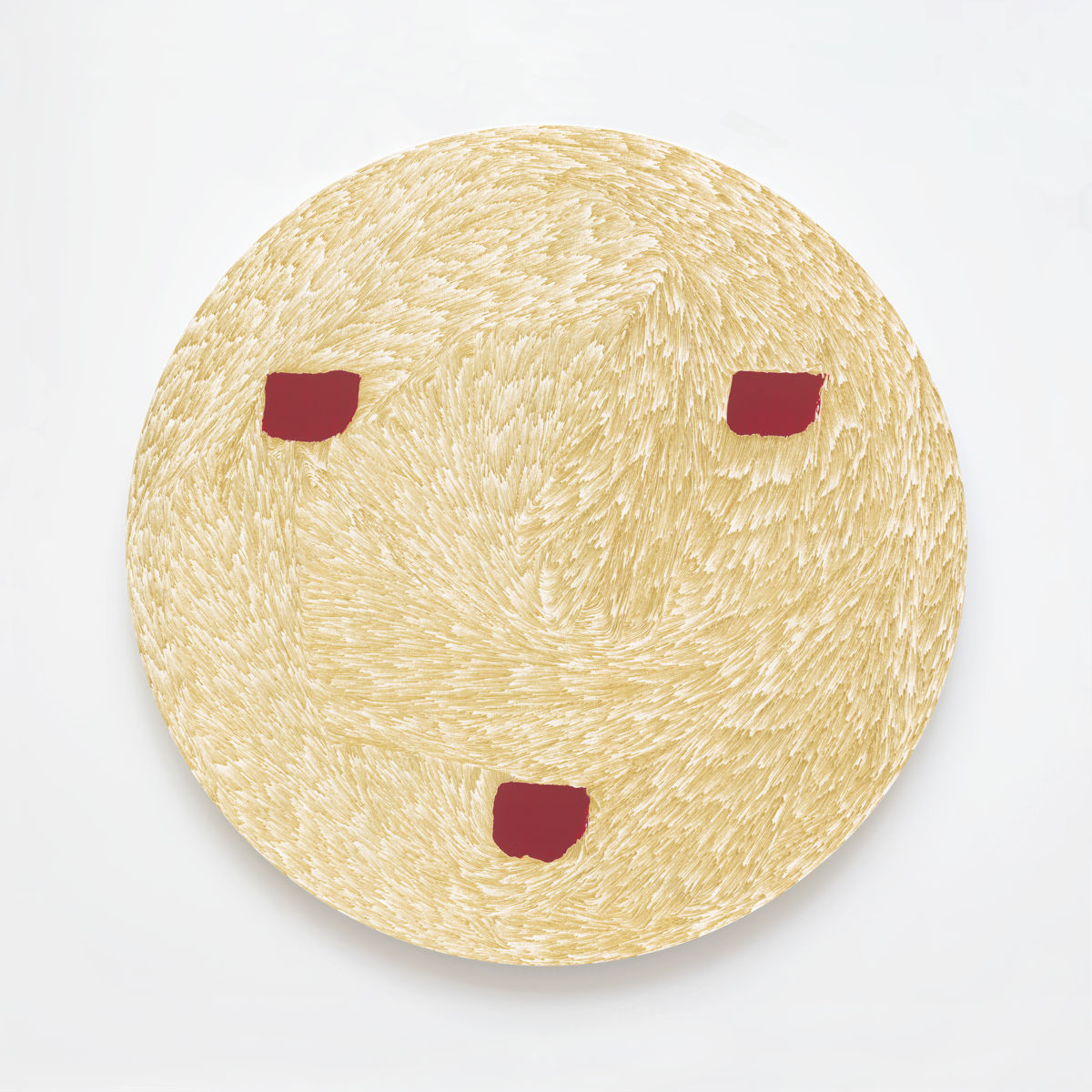
acrylic on canvas, 2022, Ø 50 cm
Niele Toroni's concept is based on the imprints of a No. 50 paintbrush, applied at regular intervals of 30 cm. Each imprint, though repetitive, is unique in shape. My approach, similarly rooted in attentiveness to brushstroke individuality, led me to merge our concepts into a single work. Both Toroni's method and mine share a paradox—the rigidity of sameness as a catalyst for continuous, organic variation.
In this painting, I responded not only to the shape of my brushstrokes but also to the three red imprints I created following Toroni's method. Each of these imprints influenced the final form of the painting in its own way. Before I began, I imagined that my brushstrokes would interact with the red imprints in a striking manner—ideally hitting them at a 45-degree angle and rebounding at right angles. Yet reality diverged. Not only in this work but also in previous ones, I have noticed that my brushstrokes often blend into those that came before. They surrender to earlier structures, as if following invisible rules. They conform to what has preceded them—contrary to my original expectation.
A brushstroke aimed at 45 degrees and bouncing back at a right angle resembles a wide-smile selfie on social media, operating within the same logic as advertising—it seeks to convince others of an apparent reality. Likewise, such a brushstroke is akin to a person choosing to establish a traditional family while suppressing an innate desire for multiple sexual partners. Yes, it is possible to direct the brush to strike at 45 degrees and rebound at a right angle. That outcome will exist in reality. But even though it is real, it will not be true.
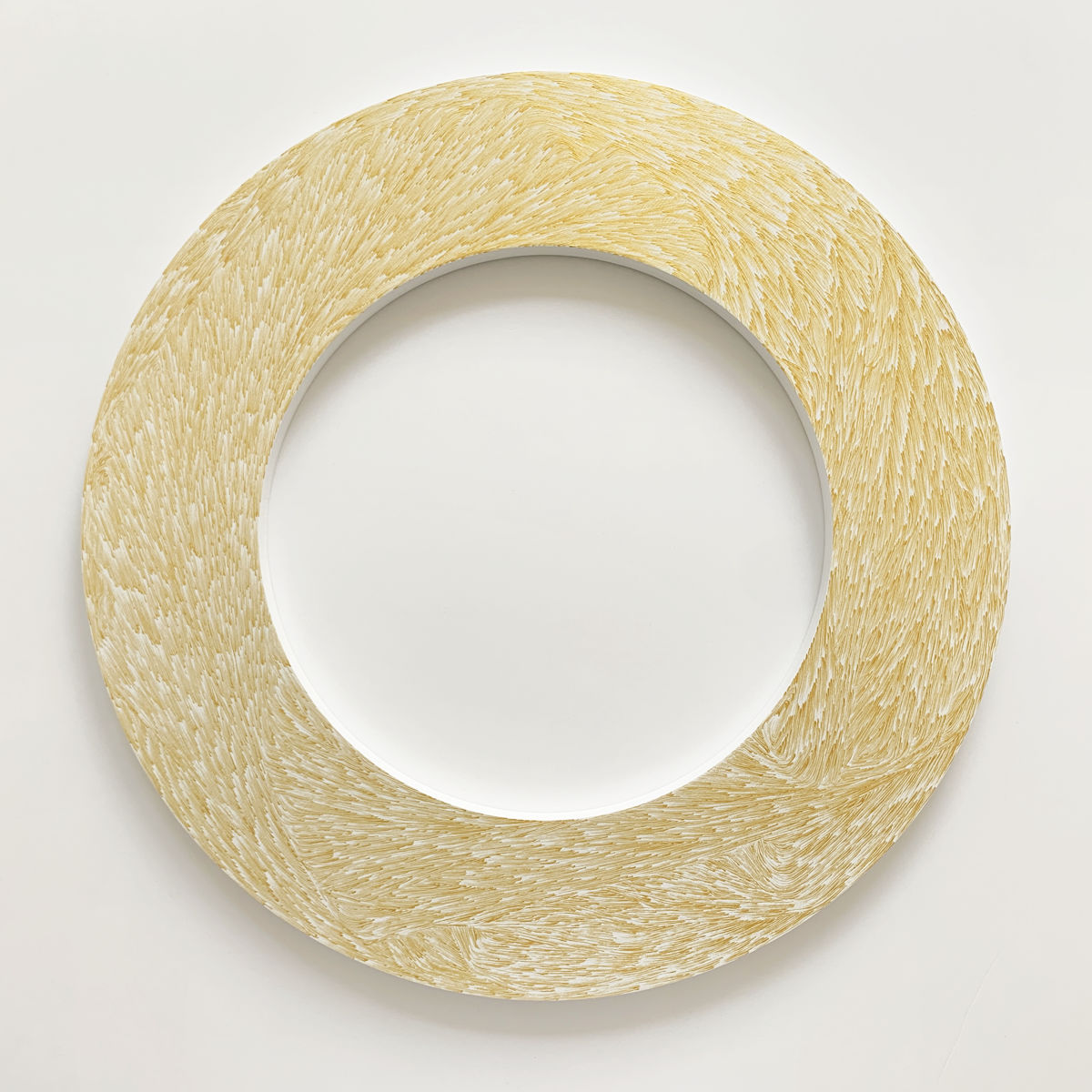
acrylic on wood, 2022, Ø 50 cm
The unnamable, the intangible—encircled by the mechanisms of nature as we know them. This is the rise and fall woven into all things, the temporality of everything. This is cyclicality, guiding us through echoes of sameness. This is The.
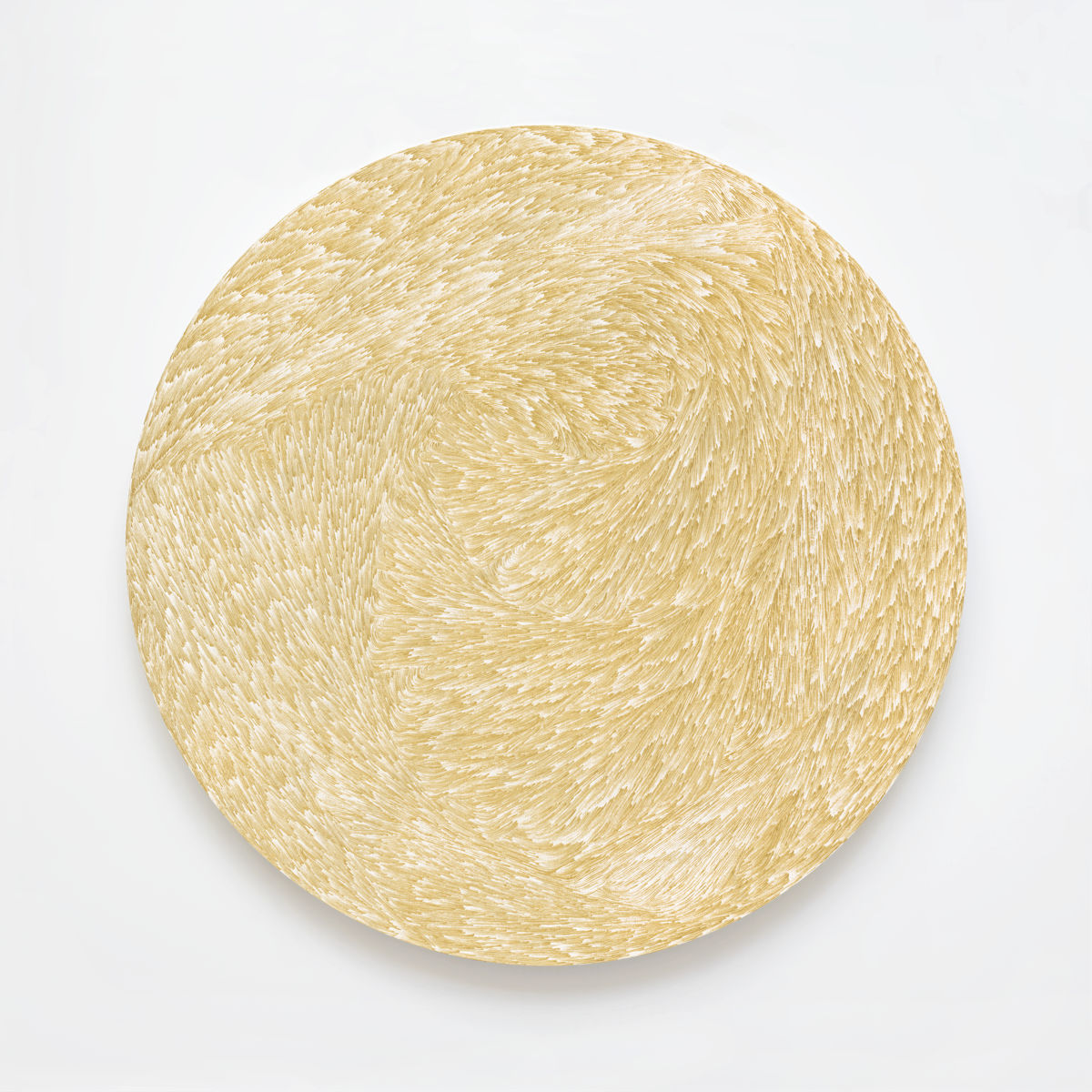
acrylic on canvas, 2021/2022, Ø 50 cm
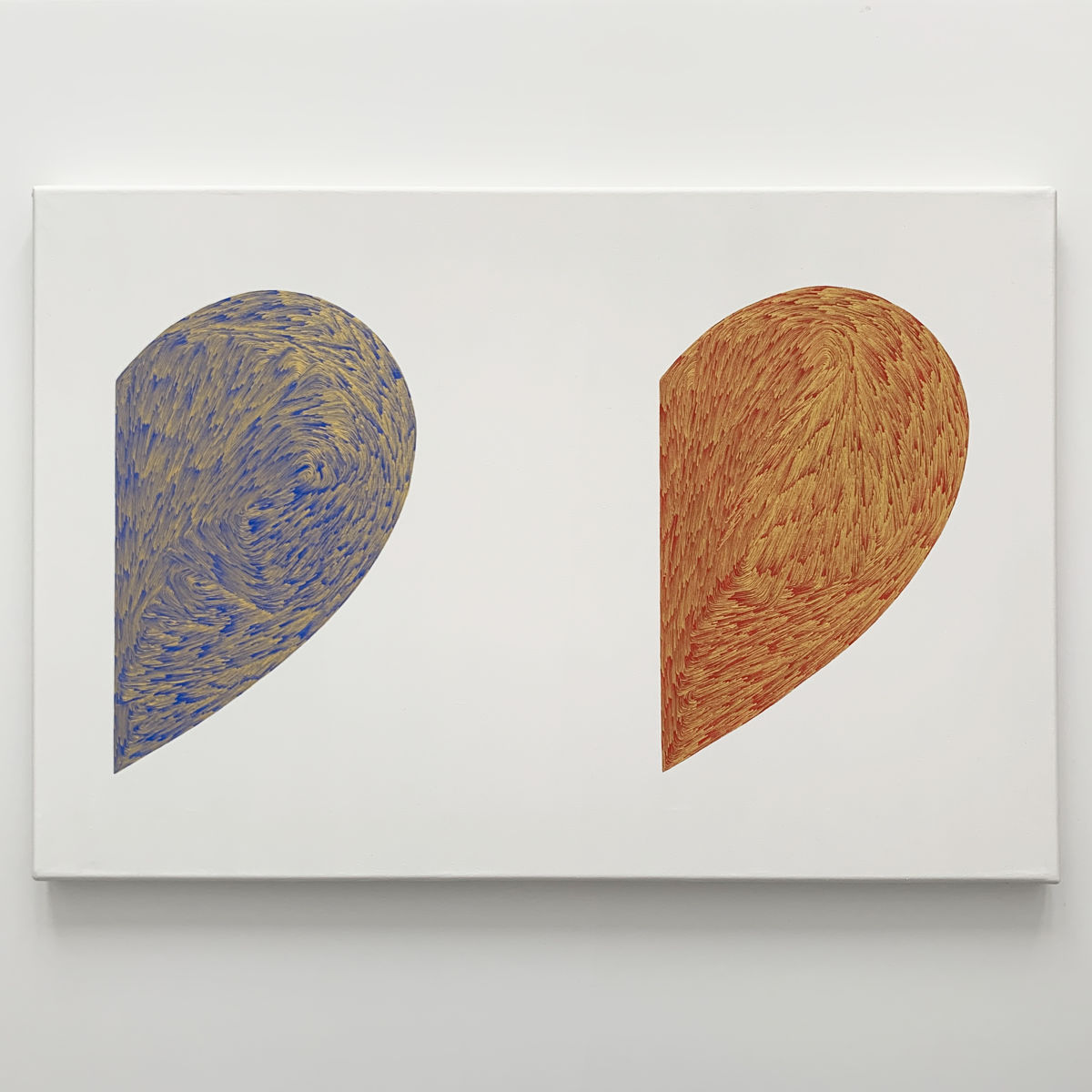
acrylic on canvas, 2021/2022, 40 x 60 cm
If Ellsworth Kelly had chosen different shapes, the final form of my painting would have been different as well. If some of the world's leaders were not murderers, we would not have to witness senseless wars. The New York and Shanghai stock exchanges respond to movements in commodity prices, just as von der Leyen assures Kyiv of EU support after touring Bucha, while a comment on a post influences the decision not to discard a painting.
This work consists of two identical shapes. Logically, my response to each should be at least similar. But it is not. It is like assuming that in two identical houses, the course of events within them will also be identical. Perhaps if someone developed an algorithm based on my concept and programmed a robot to fill the shapes, the result would be more consistent. Yet it would not necessarily reflect the human element or the principles of reality.
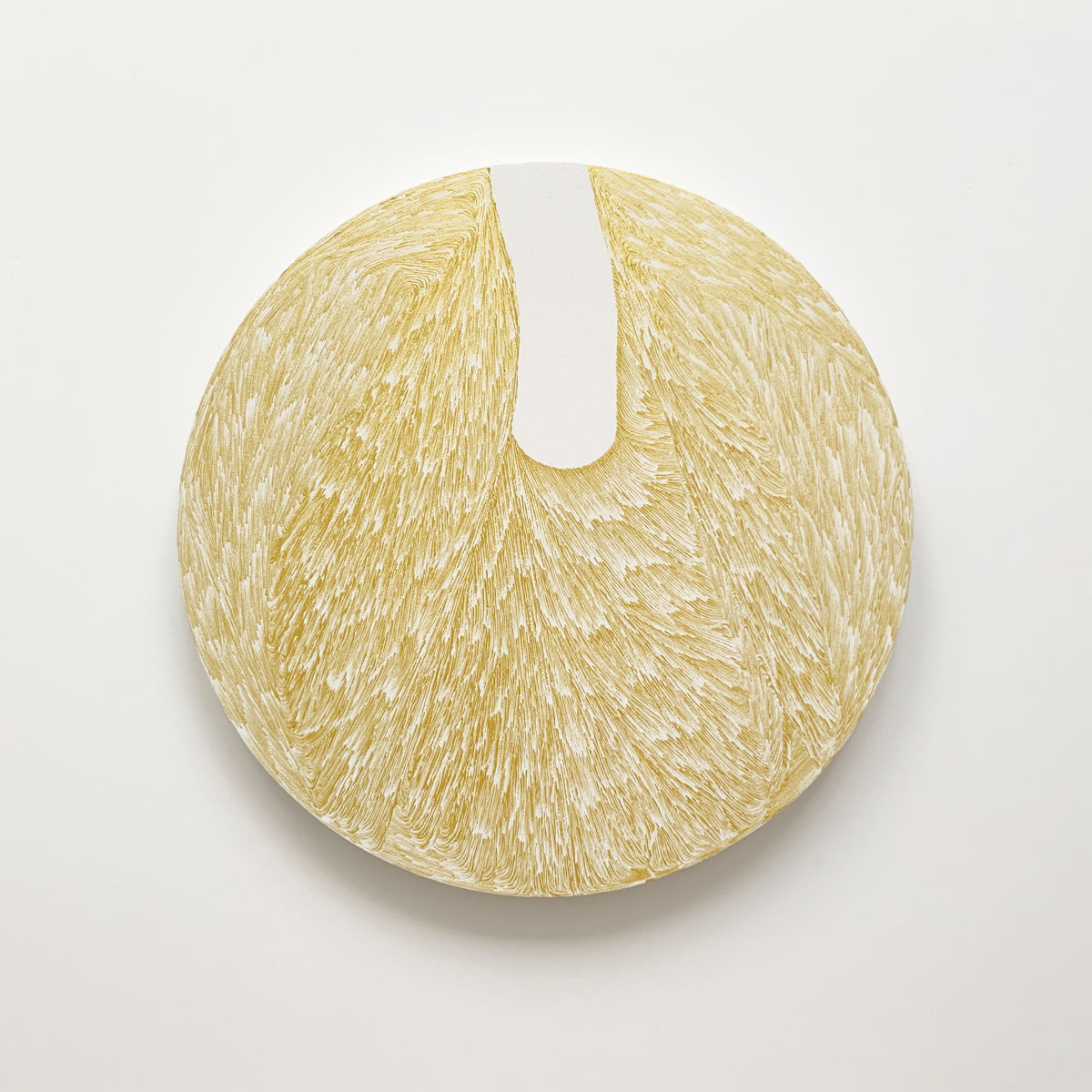
acrylic on canvas, 2022, Ø 30 cm